
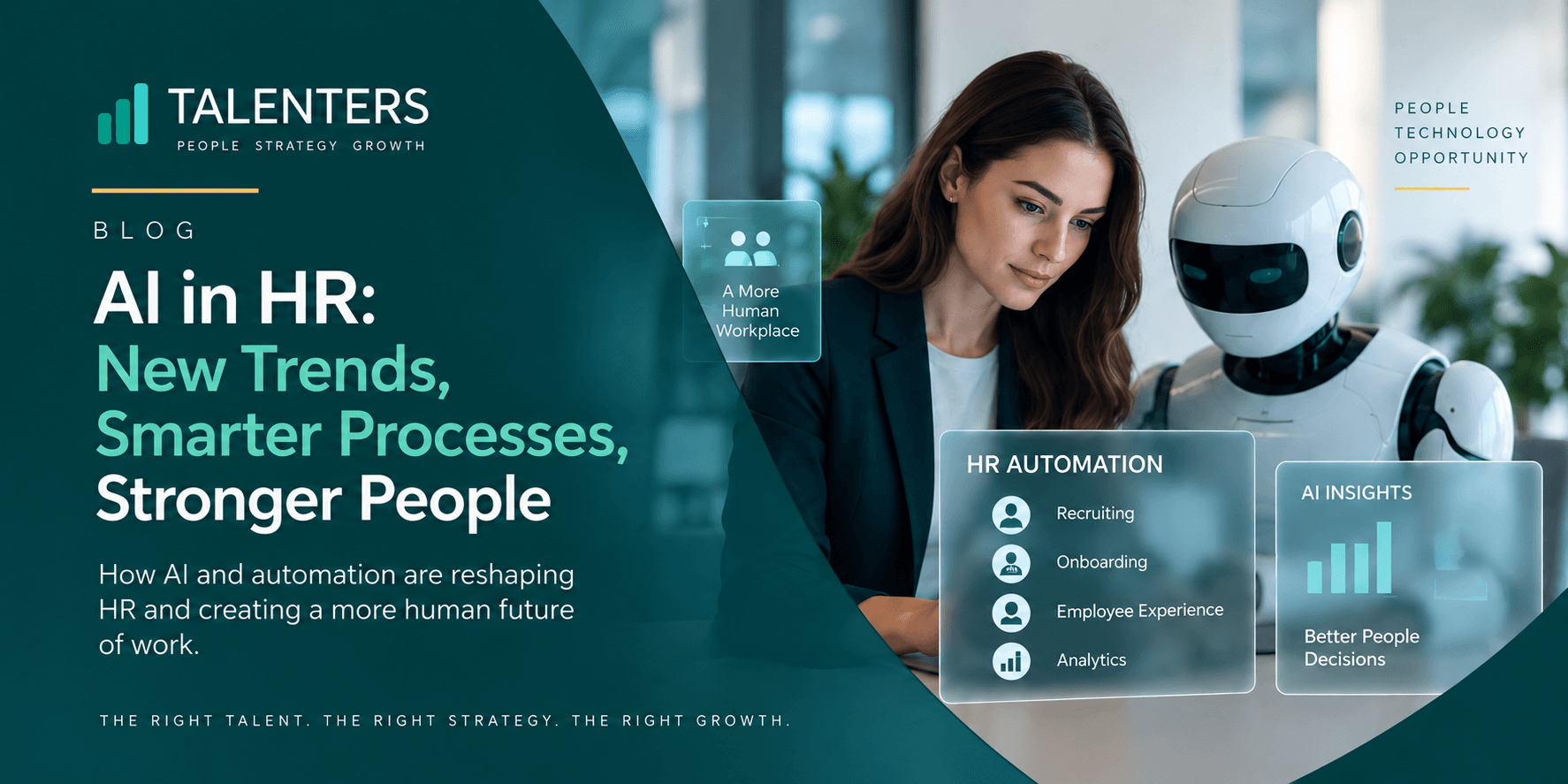
How AI and automation are reshaping HR and creating a more human future of work
Artificial intelligence is no longer a futuristic concept for HR. It is becoming a practical part of how organizations recruit talent, manage processes, analyze workforce data, support employees, and make decisions.
But the most important shift is not simply replacing manual work with technology. It is about automating what should be automated so HR professionals can spend more time on what requires human judgment, creativity, and connection.
A New Era for HR
Traditional HR teams spend significant time on repetitive administrative activities: screening applications, coordinating interviews, preparing documents, onboarding employees, updating records, answering routine questions, and generating reports.
AI and automation are changing this model.
Modern HR technology can increasingly handle or assist with repetitive processes while giving HR teams faster access to information and insights. This allows the HR function to move from primarily administrative support toward a more strategic role within the organization.
1. AI Is Changing Recruitment
Recruitment is one of the most visible areas of AI adoption in HR.
AI-powered tools can support recruiters with candidate sourcing, CV analysis, talent matching, communication, interview scheduling, and recruitment analytics.
For growing organizations, the opportunity is significant. Recruiters can spend less time performing repetitive searches and administrative work and more time engaging candidates, evaluating fit, and building relationships with talent.
However, human oversight remains essential. Hiring decisions affect people’s careers and organizations’ futures, so AI should support professional judgment—not replace it.
2. HR Automation Is Moving Beyond Recruitment
Automation is increasingly becoming part of the entire employee lifecycle.
Organizations can automate elements of:
- Employee onboarding and offboarding
- Leave and absence workflows
- Document management
- Employee data updates
- Performance review reminders
- HR reporting
- Payroll-related workflows
- Internal HR requests and FAQs
When these processes are connected through a modern HRIS, organizations can reduce repetitive work, improve consistency, and create a better experience for both employees and HR teams.
3. From HR Data to People Insights
HR departments generate large amounts of data, but having data does not automatically create value.
The next generation of HR technology is increasingly focused on turning workforce data into actionable insights.
AI-supported analytics can help organizations identify patterns relating to recruitment, turnover, workforce planning, employee engagement, skills gaps, and performance.
This can enable leaders to move from asking “What happened?” toward understanding “Why is it happening, and what should we do next?”
4. The Employee Experience Is Becoming More Personalized
Employees increasingly expect workplace technology to provide the same speed and convenience they experience with consumer technology.
AI can help personalize learning recommendations, provide faster access to HR information, support internal mobility, and guide employees toward relevant resources.
The result can be an HR function that is more accessible and responsive without requiring HR professionals to manually manage every interaction.
5. AI Skills Are Becoming HR Skills
One of the biggest HR trends is not simply adopting AI software—it is developing the ability to work effectively with AI.
HR professionals increasingly need to understand where AI can create value, how automated decisions should be reviewed, how employee information is protected, and where human intervention remains necessary.
Organizations that introduce technology without redesigning their processes may simply automate inefficient ways of working.
The stronger approach is:
Process → Technology → Automation → Optimization
First understand the process. Then determine where technology can improve it.
6. Responsible AI Will Matter More
As AI becomes more involved in decisions concerning candidates and employees, organizations also need to consider privacy, transparency, fairness, security, and accountability.
Efficiency should never come at the expense of responsible people management.
The organizations that benefit most from AI will therefore not necessarily be those that automate the most. They will be those that understand what to automate, what to augment, and what should remain fundamentally human.
The Future Is Automated – But Still Human
AI will continue changing the HR function, but this does not make HR professionals less important.
It can make their time more valuable.
When repetitive administration is reduced, HR teams can focus more on conversations, culture, organizational development, talent strategy, leadership, employee experience, and business growth.
The future of HR is therefore not technology versus people.
It is technology enabling people to perform at their best.
At TALENTERS, we help organizations strengthen their HR operations through recruitment, HR strategy and services, outsourcing, HRIS solutions, and modern people practices designed for growth.
The Right Talent. The Right Strategy. The Right Growth.